Showing posts with label Suicide. Show all posts

Thursday, December 26, 2013

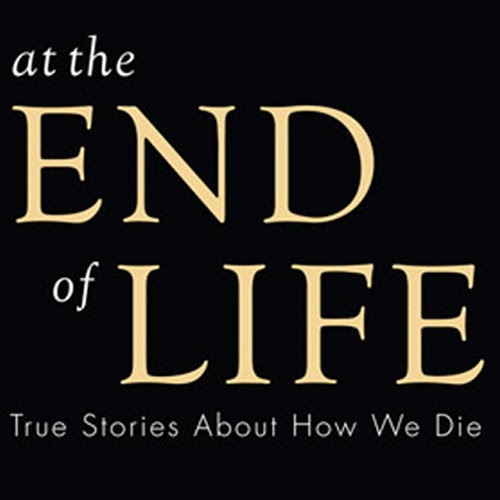
At The End of Life (2012)

True Stories about How We Die

-->
Lee Gutkind, Editor
What should medicine do when it can’t save your life?
The modern healthcare system has become proficient at staving off death with aggressive interventions. And yet, eventually everyone dies—and although most Americans say they would prefer to die peacefully at home, more than half of all deaths take place in hospitals or health care facilities.
At the End of Life tackles this conundrum head on. Featuring twenty-two compelling personal-medical narratives, the collection explores death, dying and palliative care, and highlights current features, flaws and advances in the healthcare system.
Here, a poet and former hospice worker reflects on death’s mysteries; a son wanders the halls of his mother’s nursing home, lost in the small absurdities of the place; a grief counselor struggles with losing his own grandfather; a medical intern traces the origins and meaning of time; a mother anguishes over her decision to turn off her daughter’s life support and allow her organs to be harvested; and a nurse remembers many of her former patients.
These original, compelling personal narratives reveal the inner workings of hospitals, homes and hospices where patients, their doctors and their loved ones all battle to hang on—and to let go.

DJE: These are remarkable vignettes that are really worth reading.  To savor them, they might best be read in small doses.

Friday, June 24, 2011

Suicide Prevention

Expert on Mental Illness Reveals Her Own Fight. This is an important article on suicide in the June, 23, 2011 NY Times:

"Marsha M. Linehan, creator of a treatment used worldwide for severely suicidal people, has recently "come out" and described her long struggle with mental illness. This reminds one of Elyn Saks' story and the latter's book, The Center Cannot Hold."

The Times article goes on to say: "[A]n increasing number of [seemingly normal individuals] are risking exposure of their secret, saying that the time is right. The nation’s mental health system is a shambles, they say, criminalizing many patients and warehousing some of the most severe in nursing and group homes where they receive care from workers with minimal qualifications."

Read the Times article and perhaps also Elyn Saks excellent book, in addition.

See video of Dr. Linehan from the Times article.

Monday, July 5, 2010

Fortunate Son (1992)

by Lewis Puller (Wiki Bio)
From Amazon:  Son of the famous World War II Marine commander "Chesty" Puller, Lewis Puller proudly followed in his father's footsteps. It was his misfortune, though, to serve in Vietnam in a war that brought not honor but contempt, and exacted a brutal personal price: Puller lost both legs, one hand, and most of his buttocks and stomach. Years later he was functional enough to run for Congress, bitterly denouncing the war. He lost, became an alcoholic, and almost died again. Then he climbed out of that circle of Hell to write this searingly graphic autobiography, which won a Pulitzer Prize in 1992. One last poignant postscript: three years after the enormous success of this book, the author killed himself.

I remember reading this book when it came out.  It is a memorable book that might be even more important today with so many similarly affected soldiers (and civilians).   An article published on July 4, 2010 in the NY Times "Spirit Intact, Soldier Reclaims His Life" tells a similar story, but focuses mostly on the positive.

Thursday, February 18, 2010

Surviving the Fall

The Personal Journey of an AIDS Doctor
by Peter Selwyn
From Publisher's Weekly:  "Selwyn entered his residency at an inner-city Bronx hospital in 1981, just in time for the arrival of AIDS. Medical school had prepared him to be a healer, but in the face of a devastating, incurable disease, he found his most important role was as a "witness and companion." There were certain characteristics of the disease that made it more personal, and in the devastating effects of AIDS on families, Selwyn began to sense parallels with the suicide of his father: "Like AIDS, suicide is something that stigmatizes both those who die and those who survive, something that is shrouded with shame, guilt, and secrecy." Selwyn successfully intertwines his own story with portraits of his most memorable patients, resisting the temptation to turn them into martyrs. He admires drug addicts' "yearning to live intensely in every moment" and eventually, as he becomes more and more obsessed with his work, recognizes that he shares some of their patterns of addictive behavior. As befits a memoir, this book's best moments are the intensely personal ones: Selwyn's secret fear that any weight loss meant the onset of AIDS; his attempt to trace his father's last steps in the building where he died. Selwyn credits his journey through the AIDS epidemic with making him a better doctor, but the healing went both ways as he found a new understanding that would allow him to treat the untended wounds left by his father's death."

DJE:  This is a memorable and important work for anyone interested in the effects suicide on family members.

Thursday, October 1, 2009

No Time To Say Goodbye (1999)

"A great many books have been written on the reasons for suicide from the victim's point of view, but this powerful work deals with the wrenching emotional effects of unexpected purposeful death on grieving survivors. The author's husband, seemingly a thriving physician, took his life in December 1989. Fine's discovery of his body left her with a flood of mixed emotions and anguish that inspired her to record, in vividly honest terms, the legacy of suicide on survivors. Despite the permanent sadness and even humiliation that suicide survivors face, this book offers hope in its summary of predictable patterns of adjustment. Sections move from the suicide, to its aftermath, to survival and how to make sense of the chaos. An excellent appendix includes current information on organizations, resource materials, and support groups for suicide survivors. The bibliography is extensive and useful. Recommended for public libraries and specialized mental health collections." Catherine T. Charvat, John Marshall Lib., Alexandria, Va.

This book is of value to anyone who has lost a love one suddenly and unexpectedly.

Sunday, March 29, 2009

The Bell Jar

From Amazon: Plath was an excellent poet but is known to many for this largely autobiographical novel. The Bell Jar tells the story of a gifted young woman's mental breakdown beginning during a summer internship as a junior editor at a magazine in New York City in the early 1950s. The real Plath committed suicide in 1963 and left behind this scathingly sad, honest and perfectly-written book, which remains one of the best-told tales of a woman's descent into insanity.

I just read this book. It is extraordinary, powerful and sad. The depiction of her hospital stay is not that different from Norah Gilbert's experiences in "Voluntary Madness" except that shock treatment is no longer in vogue. Elyn Saks' "The Center Can Not Hold" has similar passages. I found "The Bell Jar" somewhat painful to read. But, it is brilliant and insightful (to a degree). The etiology of her depression is not explored. Was it her father's untimely death or a near rape she experienced just before the breakdown? Shakespeare's words ring true:
The lunatic, the lover, and the poet
Are of imagination all compact.