Showing posts with label Cancer. Show all posts

Thursday, August 4, 2016

When Breath Becomes Air (2016)

by Paul Kalanithi 
From Henry Marsh's review in The Guardian

“Dr. Kalanithi describes, clearly and simply, and entirely without self-pity, his journey from innocent medical student to professionally detached and all-powerful neurosurgeon to helpless patient, dying from cancer. Every doctor should read this book—written by a member of our own tribe, it helps us understand and overcome the barriers we all erect between ourselves and our patients as soon as we are out of medical school.”—Henry Marsh, author of Do No Harm: Stories of Life, Death, and Brain Surgery

This book has enjoyed an amazing success.  It was heavily promoted by the publishers.

Random Musings on WBBA (DJE)
WBBA  an illness narrative, and the essential part deals with a 36 year-old neurosurgical resident with Stage IV lung cancer.  It's a short book, cobbled together from his computer files posthumously by his wife, Lucy, herself the physician. It's 225 pages long.  The first 114 pages comprise background material of Paul’s early years in Arizona, his education from high school, to Stanford, to Cambridge for a Masters in Philosophy, to Yale Medical school and then back to Stanford for a neurosurgical residency.  In the seventh year of his surgical training he was diagnosed with metastatic lung cancer. This part of the book starts on page 120 and ends on page 199. The last 25 pages of the book is in afterward by the author's wife. The meat of the book is therefore 75 pages that trace the terminal illness's of young doctor facing death. As such. it is valuable. In the late 1940s, John Gunter wrote Death Be Not Proud, about his son Johnny who died of a similar brain tumor.  It is a classic.

When Breath Becomes Air is the author’s bequeath to his audience. In that respect, it's similar to Francis W  Peabody’s essay "The Care of the Patient” which was published in 1926 and was the last words of a 46-year-old internist to the Harvard medical students he mentored.

What's new here is the marketing. The agents for WBBA have worked successfully to get reviews in major newspapers and periodicals published. These review have driven sales to create a bestseller. And why not? That’s how things are done.  But it seems kind of aggressive to me.

WBBA has an introduction but Abraham Verghese, an eminent physician/ writer at Stanford.  In my opinion, this forward is over-the-top and does not add value to the book.  The brilliance of WBBA is the second section of 79 pages.   That is worth parsing.

Monday, September 5, 2011

Life, On the Line (2011)

(from Amazon, but I agree) In 2007, chef Grant Achatz seemingly had it made. He had been named one of the best new chefs in America by Food & Wine in 2002, received the James Beard Foundation Rising Star Chef of the Year Award in 2003, and in 2005 he and Nick Kokonas opened the conceptually radical restaurant Alinea, which was named Best Restaurant in America by Gourmet magazine. Then, positioned firmly in the world's culinary spotlight, Achatz was diagnosed with stage IV squamous cell carcinoma-tongue cancer.

The prognosis was grim, and doctors agreed the only course of action was to remove the cancerous tissue, which included his entire tongue. Desperate to preserve his quality of life, Grant undertook an alternative treatment of aggressive chemotherapy and radiation. But the choice came at a cost. Skin peeled from the inside of Grant's mouth and throat, he rapidly lost weight, and most alarmingly, he lost his sense of taste. Tapping into the discipline, passion, and focus of being a chef, Grant rarely missed a day of work. He trained his chefs to mimic his palate and learned how to cook with his other senses.
As Kokonas was able to attest: The food was never better. Five months later, Grant was declared cancer-free, and just a few months following, he received the James Beard Foundation Outstanding Chef in America Award.

Life, on the Line tells the story of a culinary trailblazer's love affair with cooking, but it is also a book about survival, about nurturing creativity, and about profound friendship. Already much- anticipated by followers of progressive cuisine, Grant and Nick's gripping narrative is filled with stories from the world's most renowned kitchens-The French Laundry, Charlie Trotter's, el Bulli- and sure to expand the audience that made Alinea the number-one selling restaurant cookbook in America last year.

This is an amazing story -- a pathography, and much, much more.

Sunday, November 14, 2010

The Emperor of All Maladies (2010)

A Biography of Cancer
by Siddhartha Mukherjee

New Yorker Review of EOAM by Steven Shapin, November 6, 2010.

This is an incredible book that won the Pullitzer Prize in 2011. The following is from Publisher's Weekly: " Mukherjee's debut book is a sweeping epic of obsession, brilliant researchers, dramatic new treatments, euphoric success and tragic failure, and the relentless battle by scientists and patients alike against an equally relentless, wily, and elusive enemy. From the first chemotherapy developed from textile dyes to the possibilities emerging from our understanding of cancer cells, Mukherjee shapes a massive amount of history into a coherent story with a roller-coaster trajectory: the discovery of a new treatment--surgery, radiation, chemotherapy--followed by the notion that if a little is good, more must be better, ending in disfiguring radical mastectomy and multidrug chemo so toxic the treatment ended up being almost worse than the disease. The first part of the book is driven by the obsession of Sidney Farber and philanthropist Mary Lasker to find a unitary cure for all cancers. (Farber developed the first successful chemotherapy for childhood leukemia.) The last and most exciting part is driven by the race of brilliant, maverick scientists to understand how cells become cancerous. Each new discovery was small, but as Mukherjee, a Columbia professor of medicine, writes, "Incremental advances can add up to transformative changes." Mukherjee's formidable intelligence and compassion produce a stunning account of the effort to disrobe the "emperor of maladies."

Sunday, October 24, 2010

The Council of Dads (2010)

My Daughters, My Illness and the Men Who Could Be Me
by Bruce Feiler

From Amazon: In 2008, bestselling author Feiler learned he had osteogenic sarcoma, a rare, life-threatening tumor in his left leg . Fearing what his absence would do to the lives of his young daughters, Feiler asked six close friends ("Men who know my voice") to help raise them. Feiler chronicles his battle with cancer, from diagnosis to recovery, as well as his sentimental but moving journey to recruit friends who can carry out his wish to teach his daughters to travel, dream, and live life to its fullest. Feiler's intimate bond with his friends makes them unusually expressive and communicative, and their own biographies lend further inspirational dimensions to the story. It's hard not to get swept along and cheer Feiler on as he fights for his life and his daughters'.

I am indebted to Linda Welsh for sending me a copy of this inspiring and important book.

Sunday, August 23, 2009

Guts

by Robert Nylen
From the NY Times Sunday Book Review, August 23, 2009: "It is haunting to read a memoir by a writer who was racing against incurable cancer to get his words on paper, and died in December 2008 shortly after completing his work. You open Robert Nylen’s book, “Guts,” with a mixture of sadness and curiosity, braced for the inevitable. Damn, he is going to make me care about him, and mourn his untimely death. I was torn between rushing through this absorbing and disjointed story or deliberately slowing the pace, aware that once the book ended, Nylen’s raw, funny, urgent voice would be forever stilled." Full Review.

Saturday, June 6, 2009

Cancer Made Me a Shallower Person (2006)

A Memoir in Comics
by Miriam Engelberg
From Publishers Weekly: "Stricken with breast cancer at a disturbingly young age (43), Engelberg turned to cartooning to cope; the resulting work is both powerful and very funny. She starts at the very beginning, while awaiting her diagnosis. The story follows the cancer trail all the way through surgery, chemo, support groups, wigs, the distraction of cartooning, moving house while completely nauseated and the horror of a second diagnosis. In contrast to the heavy subject matter, Engelberg's artwork is naïve to the extreme, though it has some charm. The true strength of the book is its fusion of the deadly serious with the absurd, in the finest tradition of black humor. Engelberg's narrative is riveting. She traces the trajectory of both her diagnosis and her growing obsession with the crossword puzzle in the newspaper's TV guide—"must...avoid...inner...thought... processes," she announces. The reader discovers the author's difficulties in appreciating life's special moments, and witnesses the many compliments she receives on her post-chemo wig. We follow the way the medical profession communicates, the things people say when they don't know what to say and the utter incomprehensibility of not knowing if you're documenting your own slow death. It's extremely honest and extraordinarily powerful. (May) Copyright © Reed Business Information, a division of Reed Elsevier Inc. All rights reserved."

Also see: Cancer Vixen by Marissa Acocella Marchetto (another graphic cartoon pathography) You will need to scroll down for this post.

Sunday, May 17, 2009

A Season in Hell by Marilyn French

This is the harrowing story of Ms. French's odyssey in the country of the sick. It begins with esophageal cancer and progresses to the sequelae of radiation and chemotherapy which affected her heart, gastrointestinal tract, bones, lungs, kidneys, bladder and more. She defied the odds and lived 19 years cancer free. This is a gutsy gripping story.

Ms. French, a respected feminist intellectual and writer, died in May of 2009. In A Season in Hell, she is candid about her physicians and care givers. There is much in this book to instruct aspiring doctors, nurses, therapists and care givers.

Her obituary which appeared in the NY Times is worth reading, too. Click here.

Quote: "Enervation had turned me into a docile patient, helpless, caught, trapped in a system. I felt that the doctors were caught in it, too. The department, the hospital, the huge system, encompassed us all, and nothing could be done about it. They were killing me and I was letting them. There was no way to stop it." (p. 110)

This is a tough, extraordinary read. You can purchase a used copy at ABE Books.

Tuesday, December 30, 2008

Living Proof: A Medical Mutiny by Michael Gearin-Tosch (2002)


"I was told I had cancer and that I must expect to die soon. Almost eight years later I still do my job and enjoy life. I have not had conventional treatment. Did my cancer simply disappear? Did I do nothing? Far from it. A number of things happened, some by accident, most by design."

Michael Gearin-Tosh is diagnosed with cancer at the age of fifty-four. The doctors urge immediate treatment. He refuses. Intuitively, not on the basis of reason. But as the days pass, Gearin-Tosh falls back on his habits as a scholar of literature. He begins to probe the experts' words and the meaning behind medical phrases. He tries to relate what each doctor says -- and does not say -- to the doctor's own temperament. And the more questions he asks, the more adamant his refusal to be hurried to treatment.

The delay is a high-risk gamble. He listens to much advice, especially that of three women friends, each with a different point of view, one a doctor. They challenge him. They challenge medical advice. They challenge one another. On no occasion do they speak with one voice. He also turns to unexpected guides within his own memory and in the authors he loves, from Shakespeare and Chekhov to Jean Renoir, Arthur Miller, and Vaclav Havel.

In the end, he chooses not to have chemotherapy but to combat his cancer largely through nutrition, vitamin supplements, an ancient Chinese breathing exercise with imaginative visualizations, and acupuncture.

No how-to book or prescriptive health guide, "Living Proof" is a celebration of human existence and friendship, a story of how a man steers through conflicting advice, between depression and seemingly inescapable rationalism, between the medicine he rejects and the doctors he honors.

Clear-eyed and unflinching, Gearin-Tosh even includes his own medical history, "The Case of the .005% Survivor"; explores general questions about cancer; and examines the role of individual temperament on medical attitudes, the choice of treatments, and, of course, survival.

This title can be purchased from Abebooks.com starting at one dollar plus shipping.

Cancer Vixen by Marisa Acocella Marchetto (2006)


“What happens when a shoe-crazy, lipstick-obsessed, pasta-slurping, fashion-fanatic, madly-in-love, about-to-get married, big-city-girl cartoonist with a fabulous life finds . . . a lump in her breast?” That’s the question that sets this funny, powerful and poignant graphic memoir in motion. In vivid colour and with a taboo-breaking sense of humour, Marisa Marchetto tells the story of her 11-month, ultimately triumphant bout with breast cancer – from diagnosis to cure, and every challenging step in between. But Cancer Vixen is about more than surviving an illness. It is a portrait of one woman’s supercharged life in Manhattan, and a wonderful love story. Marisa, self-described “terminal bachelorette” meets her Prince Charming in Silvano, owner of the chic downtown trattoria Da Silvano. A month before their wedding, she receives her diagnosis. She wonders: How will he react to this news? How will my world change? Will I even survive? And . . . what about my hair? From raucous New Yorker staff lunches and the star-studded crowd at Silvano’s restaurant, to the rainbow pumps Marisa wears to chemotherapy, Cancer Vixen is a total original. Her wit and courage are an inspiration – she’s a cancer vixen, not its victim: “Cancer,” she says, “I’m going to kick your butt! And I’m going to do it in killer five-inch heels!”  This is an incredible graphic novel.

Abebooks.com has Cancer Vixen available starting at one dollar plus shipping.

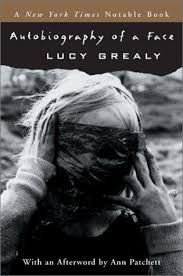
Autobiography of a Face by Lucy Grealy (1994)

"I spent five years of my life being treated for cancer, but since then I've spent fifteen years being treated for nothing other than looking different from everyone else. It was the pain from that, from feeling ugly, that I always viewed as the great tragedy of my life. The fact that I had cancer seemed minor in comparison."


At age nine, Lucy Grealy was diagnosed with a potentially terminal cancer. When she returned to school with a third of her jaw removed, she faced the cruel taunts of classmates. In this strikingly candid memoir, Grealy tells her story of great suffering and remarkable strength without sentimentality and with considerable wit. Vividly portraying the pain of peer rejection and the guilty pleasures of wanting to be special, Grealy captures with unique insight what it is like as a child and young adult to be torn between two warring impulses: to feel that more than anything else we want to be loved for who we are, while wishing desperately and secretly to be perfect.

Available from Abebooks.com starting at one dollar plus shipping.

Ann Patchett's Truth and Beauty is a moving memoir about Patchett's friendship with Grealy that began when they were college students.

At the Will of the Body: Reflections of Illness by Arthur Frank (1991)

In this deeply affecting memoir, Arthur W. Frank explores the events of illness from within: the transformation from person to patient, the pain, the wonder, and the ceremony of recovery. To illuminate what illness can teach us about life, Frank draws upon his own encounters with serious illness -- a heart attack at age thirty-nine and, a year later, a diagnosis of cancer. In poignant and clear prose, he offers brilliant insights into what happens when our bodies and emotions are pushed to extremes. Ultimately, he examines what it means to be human.

This was one of the first pathographies I read, and even to day, one of the most instructive and educational.

Frank feels that “illness is an opportunity, though a dangerous one… Critical illness offers the experience of being taken to the threshold of life, from which you can see where your life could end. From that vantage point you are both forced and allowed to think in new ways about the value of your life… Illness takes away parts of your life, but in doing so it gives you the opportunity to choose the life you will lead, as opposed to living the one you have simply accumulated over the years.”

Can be purchased from Abebooks.com starting at one dollar.