Saturday, April 26, 2014

Now I See You (2014)


June 24, 2014
At nineteen years old, Nicole C. Kear's biggest concern is choosing a major--until she walks into a doctor’s office in midtown Manhattan and gets a life-changing diagnosis. She is going blind, courtesy of an eye disease called retinitis pigmentosa, and has only a decade or so before Lights Out. Instead of making preparations as the doctor suggests, Kear decides to carpe diem and make the most of the vision she has left. She joins circus school, tears through boyfriends, travels the world, and through all these hi-jinks, she keeps her vision loss a secret.

When Kear becomes a mother, just a few years shy of her vision’s expiration date, she amends her carpe diem strategy, giving up recklessness in order to relish every moment with her kids. Her secret, though, is harder to surrender - and as her vision deteriorates, harder to keep hidden. As her world grows blurred, one thing becomes clear: no matter how hard she fights, she won’t win the battle against blindness. But if she comes clean with her secret, and comes to terms with the loss, she can still win her happy ending.        

Told with humor and irreverence, Now I See You is an uplifting story about refusing to cower at life’s curveballs, about the power of love to triumph over fear. But, at its core, it’s a story about acceptance: facing the truths that just won't go away, and facing yourself, broken parts and all. 
I have not read this book yet.(DJE)

Wednesday, April 23, 2014

The Last Best Cure

by Donna Jackson Nakazawa

Recently, a good friend recommended “The Last Best Cure” (LBC) to me. I was a bit skeptical of books that might prove to be “fluff.”  As I read it, however, I was impressed how relevant it is to the lives of so many of my patients who are chronically ill.

One of the book’s key themes is that Adverse Childhood Experiences (ACEs) play an important role in determining our health as adults.  LBC is Donna Nakazawa’s personal story.  She is a talented science journalist who brings a technical background to the subject while, at the same time, infuses the story with memorable personal anecdotes.

The subject of ACEs is an important one.  An early investigator was Vincent Filetti whose work explored the impact of ACEs on the health of adults who were patients at Kaiser Permanente in San Diego.  A more accessible place to read about ACEs is Paul Tough’s New Yorker article, “The Poverty Clinic.”

Here is an interview with Ms. Jackson that appeared in PBS’s online magazine.  Her journey back to health began with meeting a remarkable Hopkin’s physician, Anastasia Rowland Seymour, director of Johns Hopkins University's Program in Integrative Medicine.

If you are a health care provider, a patient, or a family member of someone with a chronic illness, LBC will be a helpful, well-written and welcome guide.

Virginia Tanji, the head librarian at John A. Burns School of Medicine, recommended this book to me.  She writes: "I read this book and recommended it to both the book clubs I belong too.  It resonated with both groups. I think we were inspired by how the author achieved "health" via meditation, yoga, and acupuncture...and the insight provided by the ACE connection to her chronic conditions.  I could definitely relate and personally, I always say what keeps me sane and healthy is writing a journal and qigong and tai chi!, which for me is the equivalent of meditation and yoga. 

Sunday, April 20, 2014

God's Hotel by Victoria Sweet (2012)

-->
GOD’S HOTEL: A Doctor, a Hospital and a Pilgrimage to the Heart of Medicine.

In her brilliant book review, Abigail Zuger writes, “It is probably pointless to suggest that all the individuals presently shaping our health care future spend a quiet weekend with “God’s Hotel,” Dr. Victoria Sweet’s transcendent testament to health care past. Who interrupts cowboys in the midst of a stampede?

But if you’re one of the millions of doctors and patients out there choking on their dust, this is the book for you. Its compulsively readable chapters go down like restorative sips of cool water, and its hard-core subversion cheers like a shot of gin.”


Monday, March 10, 2014

Stations of the Heart (2013)

by Richard Lischer

This is a moving and important book by the father of a 33 yo man with metastatic melanoma.  It chronicles the last three months of Adam Lischer's life.  The book describes the medical, spiritual and philosophical aspects of Adam's death.  It's a valuable book.  I have typed out a few pages of quotations which I will eventually edit and link to this site.

There are many medical details that a dermatologist would like to know, but they are less important than the view from the family's standpoint.

Monday, February 3, 2014

Manic: A Memoir (2009)


Terri Cheney’s book, Manic: A Memoir, written in a nonlinear form, describes her gut-wrenching life as a manic-depressive. She tells of the ups and downs in her life and explains the thought processes of someone with bipolar disorder (BPD). She tells of her search for the right doctor and the right medication to stabilize her as well as her suicide attempts. This is an honest look at BPD by someone who is quite literate.

From Amazon Blurb: An attractive, highly successful Beverly Hills entertainment lawyer, Terri Cheney had been battling debilitating bipolar disorder for the better part of her life—and concealing a pharmacy’s worth of prescription drugs meant to stabilize her moods and make her "normal." In explosive bursts of prose that mirror the devastating mania and extreme despair of her illness, Cheney describes her roller-coaster existence with shocking honesty, giving brilliant voice to the previously unarticulated madness she endured. Brave, electrifying, poignant, and disturbing, Manic does not simply explain bipolar disorder—it takes us into its grasp and does not let go.
(Review submitted by Stephen Cimini)

Saturday, February 1, 2014

A 500 Pound Amoeba and Other Psychiatric Tales

by Steve Sobel, M.D.


Steve Sobel is a practicing psychiatrist in northern Vermont. "A 500 Pound Amoeba" is a collection of 10 compelling vignettes of patients with psychiatric illnesses. These comprise depression, mania, OCD, body dysmorphic disorder, borderline personality, generalized anxiety disorder, schizophrenia, acrophobia, psychotic depression, and dementia. The stories are told with great sensitivity. Each one is divided into two parts. The first describing the illness as appreciated from the patient’s vantage point and the second explains the clinician’s approach and touches on the doctor-patient relationship.

We have all known patients like the composites Dr. Sobel eloquently conveys. As physicians, we have all had patients like these. Sobel’s narrative style is easy to read and follow.  These tales afford profound insights into the illnesses covered.

This slender volume of less than 130 pages will make compelling reading for physicians, mental health professionals, trainees, medical students and all others with an interest in mental health.  Sobel has a gentle, compassionate writing style and the tales are memorable. The narrative form employed also serves as a template for the presentation of similar patients.  
 
Available at Amazon for around $10 and also on Kindle for $7

Thursday, December 26, 2013

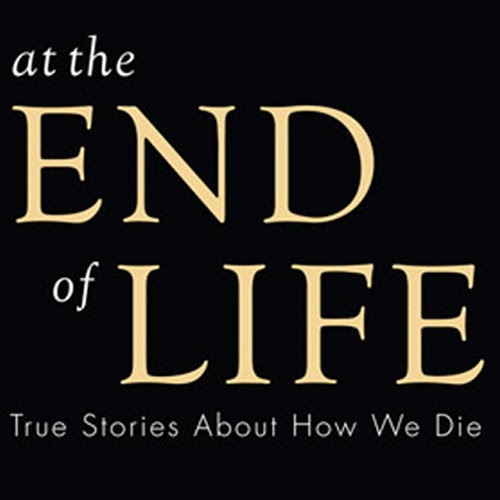
At The End of Life (2012)

True Stories about How We Die

-->
Lee Gutkind, Editor
What should medicine do when it can’t save your life?
The modern healthcare system has become proficient at staving off death with aggressive interventions. And yet, eventually everyone dies—and although most Americans say they would prefer to die peacefully at home, more than half of all deaths take place in hospitals or health care facilities.
At the End of Life tackles this conundrum head on. Featuring twenty-two compelling personal-medical narratives, the collection explores death, dying and palliative care, and highlights current features, flaws and advances in the healthcare system.
Here, a poet and former hospice worker reflects on death’s mysteries; a son wanders the halls of his mother’s nursing home, lost in the small absurdities of the place; a grief counselor struggles with losing his own grandfather; a medical intern traces the origins and meaning of time; a mother anguishes over her decision to turn off her daughter’s life support and allow her organs to be harvested; and a nurse remembers many of her former patients.
These original, compelling personal narratives reveal the inner workings of hospitals, homes and hospices where patients, their doctors and their loved ones all battle to hang on—and to let go.

DJE: These are remarkable vignettes that are really worth reading.  To savor them, they might best be read in small doses.